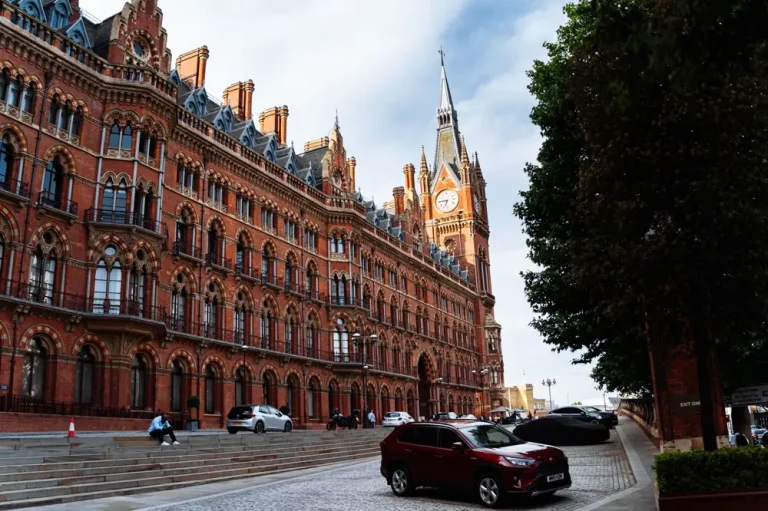
Four Seasons New York Cost Per Night Midtown Manhattan
By the Luxury Stay Guides Editorial Team — reviewed for accuracy. Last updated November 2026. This article is for informational purposes and reflects typical market pricing; verify current details with the properties and booking channels directly.
The Four Seasons New York on East 57th Street runs $1,200-$4,500 per night — a 38-story limestone tower where the entry room starts where most Manhattan hotels top out.
This guide prices the property honestly: room and suite tiers, what the rate includes and what prices separately, and the booking channels that move the total.
What This Guide Covers
- Understanding the topic and how pricing works
- The main categories and how they compare
- Three realistic scenarios with real numbers
- A sample budget breakdown
- Practical strategies to control costs
- Common risks and how to avoid them
- Best practices and ongoing habits
- Frequently asked questions
Understanding Four Seasons New York Cost Per Night Midtown Manhattan
The entry-level deluxe rooms run $1,200-1,800 in shoulder season and $1,600-2,400 at December peak. The property’s 368 rooms are genuinely large by Manhattan standards — entry rooms at 520 square feet clear the 300-350 square foot norm of the surrounding Midtown full-service competitors.
Premier and deluxe-view rooms add $300-600 per night for the park-side and skyline orientations. Junior suites start at $2,400-3,000, one-bedroom suites at $3,200-4,500, and the specialty suites price on request. Rates swing 40-60% between February shoulder and December peak, with the September-November corporate window pricing high on weekday demand.
As a working planning number for Midtown Manhattan in 2026, the typical range sits at $1,200–$4,500 — with the categories and scenarios below explaining what moves a specific case up or down that range.
Key Categories and Options
The main approaches and how they compare on cost, convenience and use case:
| Category / Type | Description | Common Use Case | Cost / Effort Level |
|---|---|---|---|
| Deluxe room | Entry tier at 520 square feet with park or skyline exposure — the honest baseline for the property. | Travelers testing the property without suite commitment | $1,200-1,800 shoulder / $1,600-2,400 peak |
| Premier room | Higher floor with unobstructed Central Park or skyline view, 550-600 square feet. | First-time visitors wanting the view on the first stay | +$300-600 over deluxe |
| Junior suite | Separate sitting area in 750-850 square feet, upgraded furnishings. | Couples celebrating or working extended stays | $2,400-3,000 |
| One-bedroom suite | Full living room separation at 1,000+ square feet with butler-serviced floor. | Families and executives hosting | $3,200-4,500 |
The right choice depends on the scenario that matches your travel pattern — the three below cover the situations most travelers actually face.

Three Realistic Scenarios
The anniversary couple — $1,750 total per night
Two guests on a three-night October anniversary stay, premier room, breakfast included via the booking channel.
- Premier room rate — $1,500–$1,700
- Breakfast for two, included via channel — $0.0–$90
Why this matters: The $1,750 all-in against the $210 walk-in breakfast for two and the $95 park-view premium bought separately prices the channel choice honestly — the inclusions swing the math more than the rate itself.
The December family suite — $3,900 per night
A family of four over the holiday week, one-bedroom suite with rollaway, club breakfast.
- One-bedroom suite holiday rate — $3,600–$3,900
- Rollaway setup — $0.0–$75
Why this matters: The holiday-week suite premium runs 35-45% over the same suite in February — the family that can shift two weeks saves $1,500-2,000 on a four-night stay without changing rooms.
The corporate extended stay — $1,450 per night
A Monday-Friday business stay, deluxe room, corporate rate floor with flexible cancellation.
- Deluxe room corporate rate — $1,300–$1,500
- Evening dining, bought separately — $120–$180
Why this matters: The weekday corporate window prices $100-300 under leisure OTA rates at the same room — the flexible-rate premium at $15-25 nightly buys the schedule-change option that corporate itineraries use.
The scenarios differ mainly in scope and commitment level — the same decision logic applies at every scale.
Sample Budget Breakdown
The table below shows how a typical mid-range budget for four seasons new york cost per night midtown manhattan distributes across the main cost lines. Adjust the percentages to your own plans before using it as a savings target.
| Category | Estimated Amount | Explanation | Optimization Tip |
|---|---|---|---|
| Room rate per night | $1,200–$4,500 | The tier and the season decide 60-70% of the total. | Compare tier totals, not headline rates |
| Breakfast for two | $90–$210 | Bought separately at $45-105 per person at the property restaurant. | Channel-book with breakfast when the delta under $60 |
| Taxes and fees | $210–$460 | New York hotel tax runs 14.75% plus $3.50 per night occupancy fee. | Confirm the out-the-door total before booking |
| Incidentals hold | $200–$500 | The property holds $500 per night on suites for incidentals. | Use a card with the headroom |
Figures are indicative 2026 market ranges. Program terms, taxes and rates change — verify totals at the point of booking.
Practical Strategies to Control Costs
Cost control on four seasons new york cost per night midtown manhattan is mostly about information habits. These are the strategies that consistently deliver the largest savings:
Compare like-for-like on the total, not the rate
Resort fees, breakfast for two, and club lounge access swing $80-200 per night between quoted rates — the total with inclusions compared, not the headline rate, decides the value. A $340 rate with club access beats a $290 rate plus $120 of bought breakfasts.
Advantages:
- Delivers measurable savings on real bookings
- No special status or points balance required
Disadvantages:
- Takes spreadsheet discipline at comparison time instead of decision speed.
- Requires habits the casual traveler may not maintain
Price the shoulder seasons honestly
The same suite runs 30-50% lower in the four weeks flanking peak — the weather tradeoff measured against the savings decides it. Maldives in May, the Alps in late June, and the Mediterranean in early October deliver the same rooms at materially lower totals.
Advantages:
- Delivers measurable savings on real bookings
- No special status or points balance required
Disadvantages:
- Weather risk is real — the shoulder bet sometimes pays in rain.
- Requires habits the casual traveler may not maintain
Match the property tier to the trip purpose
A celebration justifies the flagship; a business night reads the business hotel — the tier matched to the occasion avoids paying for lobby spectacle that goes unused. The $700 flagship night serves the anniversary; the $280 business hotel serves the layover better than a discounted flagship corner room.
Advantages:
- Delivers measurable savings on real bookings
- No special status or points balance required
Disadvantages:
- Requires resisting the upgrade temptation on routine trips.
- Requires habits the casual traveler may not maintain
Book refundable early, reprice at the window
Refundable rates at booking plus a repricing pass 21-30 days out captures drops without cancellation risk — the best of both channels. Rate drops of 10-20% inside the final month are common in resort markets with soft occupancy.
Advantages:
- Delivers measurable savings on real bookings
- No special status or points balance required
Disadvantages:
- Takes calendar discipline for the reprice pass — a forgotten pass is a missed drop.
- Requires habits the casual traveler may not maintain
Common Risks and How to Avoid Them
Every booking pattern carries failure modes worth knowing before the money moves:
Category bait-and-switch
- The issue: The booked category sells out and the property walks the reservation down a tier — the compensation at walk-time is negotiable well beyond the first offer, and a documented category at booking is the leverage..
- Why it happens: The booked category sells out and the property walks the reservation down a tier — the compensation at walk-time is negotiable well beyond the first offer, and a documented category at booking is the leverage..
- Prevention: 2/10
Seasonal weather risk
- The issue: Shoulder-season pricing trades 30-50% savings against real weather risk — the destination climate record for the specific weeks checked before the bet is placed..
- Why it happens: Shoulder-season pricing trades 30-50% savings against real weather risk — the destination climate record for the specific weeks checked before the bet is placed..
- Prevention: 4/10
Renewal-construction noise
- The issue: Properties mid-renovation price low without disclosure — the renovation status asked directly at booking surfaces the jackhammers before the airport transfer does..
- Why it happens: Properties mid-renovation price low without disclosure — the renovation status asked directly at booking surfaces the jackhammers before the airport transfer does..
- Prevention: 3/10
Resort-fee creep
- The issue: Fees quoted at booking rise $10-20 by checkout at some properties — the pre-arrival email confirms the current number, and the discrepancy at the desk is contestable with the booking confirmation in hand..
- Why it happens: Fees quoted at booking rise $10-20 by checkout at some properties — the pre-arrival email confirms the current number, and the discrepancy at the desk is contestable with the booking confirmation in hand..
- Prevention: 3/10

Best Practices and Ongoing Habits
The recurring habits that keep costs controlled between trips:
| Habit | Frequency | Cost | Why It Matters |
|---|---|---|---|
| Fee-stack confirmation email | 72 hours before arrival | Free | The resort fee and tax total confirmed in writing beats the desk dispute. |
| Shoulder-season climate check | Before booking shoulder dates | Free | The weather record for the exact weeks priced before the savings bet. |
| Renovation status check | At booking | Free | The construction status asked directly before the transfer does. |
| Reprice pass on refundable bookings | Every booking at 21-30 days | Free | The 10-20% drop the final-month window catches at soft-occupancy resorts. |
These habits compound: the travelers who run them pay measurably less over years, not because of tricks, but because the information asymmetry runs their way.
Frequently Asked Questions
What is included in a luxury hotel rate?
The honest answer: less than the rate implies — resort fees of $40-95, breakfast for two at $60-120, and parking at $45-85 price separately at most full-service properties unless the rate bundles them.
When is the cheapest time to book luxury hotels?
Shoulder seasons price 30-50% below peak — the four weeks flanking high season deliver the same rooms at materially lower totals; the last-month window on refundable rates catches another 10-20% at soft-occupancy resorts.
How much does a luxury hotel cost per night?
Luxury hotel rates run $300-800 at full-service city properties, $600-1,500 at flagship resorts, and $1,000-3,000+ at ultra-luxury estates — the destination cluster and the season move the range more than the chain does.
What is included in a luxury hotel rate?
The honest answer: less than the rate implies — resort fees of $40-95, breakfast for two at $60-120, and parking at $45-85 price separately at most full-service properties unless the rate bundles them.
Summary
Planning four seasons new york cost per night midtown manhattan in Midtown Manhattan starts with the honest range — $1,200–$4,500 for the scenarios most travelers actually book — then works backwards through the tier that sets the floor, the season that swings it 40-60%, and the channel inclusions that decide the value.
The February shoulder prices the same limestone tower 40-60% under December — the tier chosen honestly beats the channel shopped aggressively. Verify current terms at the point of booking, price totals rather than headline rates, and let the comparison habits compound across every trip. Those three practices protect more budget than any single program choice.